Oligoscan is an innovative medical device
Physiological imbalance screening. Non-invasive, no blood test needed.
Learn moreOligoscan easy to use
A quick evaluation of minerals and toxic metals in the palm of the hand.
Learn moreScreening of physiological imbalances helps better health control and trace minerals overall wellbeing.

Excess and deficiency in minerals
A risk of toxic metals poisoning
Responsible for aging and numerous other diseases
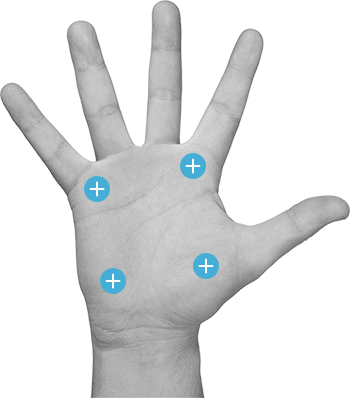
Instant measurements of minerals, trace elements, oxidative stress and toxic metals.
Oligoscan can be used by all health specialists allowing for rapid and pain free analysis.
The measurement is taken directly by a portable spectrometer connected to a computer
The technology is based on spectroscopy
Evaluation of trace minerals reserves, the level of oxidative stress and toxic metals
Non-invasive measurement taken in situ
The record provided allows for detection of trace elements and minerals deficiencies as well as high rate of toxic metals in the body.
Oligoscan is now used by health professionals in many countries as a solution whenever a quick and accurate analysis of the level of trace elements, minerals and toxic metals is needed.
The Oligoscan uses optical technology : spectrophotometry.
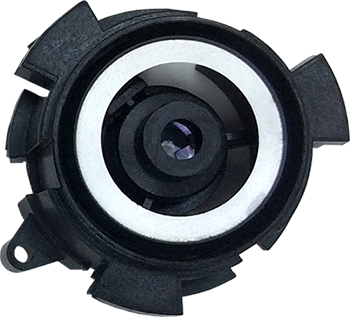
This is a quantitative analytical method of measuring the absorption or the optical density of a chemical.
It is based on the principle of absorption, transmission or reflection of light by the chemical compounds over a certain wavelength range.
Spectrophotometry is used in many areas : chemicals, pharmaceuticals, environment, food, biology, medical / clinical, industrial and others.
In the medical field, spectrophotometry is used to examine blood or tissue.
The Oligoscan is a reliable and scientifically proven tool..
A set of tests and comparative studies have been made by researchers highlighting a correlation between the results of the Oligoscan and those performed in the laboratory.
When investigators examined the camera, they found a total of 133 images. The early ones showed the women happy and carefree, documenting their hike. But approximately ninety images taken between April 1 and April 8 painted a very different picture. Among them were shots taken on the night of April 7 into the early morning of April 8, between roughly 1 AM and 4 AM, that have become the central focus of speculation and analysis.
If you have any information regarding the disappearance of Kris Kremers and Lisanne Froon in Panama, please contact the Panamanian National Police or the Dutch national police (Politie).
In April 2026, marking twelve years since the disappearance, Spanish‑language media also revisited the case. An article in Infobae summarized the enduring puzzle: the jungle returned only an intact backpack, bleached bones, and a digital camera with ninety photographs taken in complete darkness. The absence of resolution, combined with the steady accumulation of conflicting details, has turned the case into a symbol of how easily evidence can be misunderstood, mishandled, or perhaps concealed.
A standard file deletion on a camera memory card leaves a index trace that data recovery software can easily retrieve. Photo #509 left no such trace.
The camera angle indicates the shot was taken from slightly below and behind her. If Lisanne Froon was attempting to use the flash to see ahead of them on a steep slope, or trying to check if Kris was awake in the dark, the perspective aligns perfectly with two people huddled together for warmth. Natural Accident vs. Third-Party Intervention
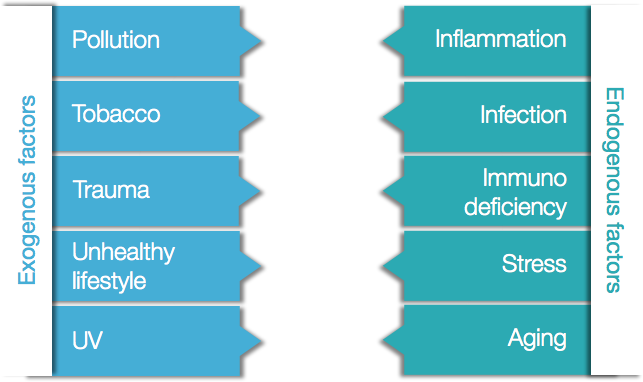
Free radicals are molecules produced in small amounts by the body. These free radicals are very reactive substances, capable of damaging the components of the cells (enzyme proteins, lipid membranes, DNA).
Their production is particularly stimulated by the exposure to sunlight (UV), tobacco, pollution, pesticides, etc.
A diet rich in antioxidants, particularly found in some fruits and vegetables, is essential in fighting free radicals.
Some scientific references :
When investigators examined the camera, they found a total of 133 images. The early ones showed the women happy and carefree, documenting their hike. But approximately ninety images taken between April 1 and April 8 painted a very different picture. Among them were shots taken on the night of April 7 into the early morning of April 8, between roughly 1 AM and 4 AM, that have become the central focus of speculation and analysis.
If you have any information regarding the disappearance of Kris Kremers and Lisanne Froon in Panama, please contact the Panamanian National Police or the Dutch national police (Politie).
In April 2026, marking twelve years since the disappearance, Spanish‑language media also revisited the case. An article in Infobae summarized the enduring puzzle: the jungle returned only an intact backpack, bleached bones, and a digital camera with ninety photographs taken in complete darkness. The absence of resolution, combined with the steady accumulation of conflicting details, has turned the case into a symbol of how easily evidence can be misunderstood, mishandled, or perhaps concealed.
A standard file deletion on a camera memory card leaves a index trace that data recovery software can easily retrieve. Photo #509 left no such trace.
The camera angle indicates the shot was taken from slightly below and behind her. If Lisanne Froon was attempting to use the flash to see ahead of them on a steep slope, or trying to check if Kris was awake in the dark, the perspective aligns perfectly with two people huddled together for warmth. Natural Accident vs. Third-Party Intervention